

When I first began to learn Tarot, I quickly realized the process started not with study, but with unlearning. Myths about psychic powers, the pressure to memorize all 78 cards, and arcane rituals created a fog of confusion that made it hard to see the heart of the practice. But here’s the truth: Tarot is a tool for self-reflection and intuitive insight—accessible to anyone willing to engage with it. Whether you’re a complete beginner or someone returning to the practice, intuitive tarot reading offers a unique path to personal growth.
Myth 1: Tarot Is Only About Predicting the Future

I used to believe that Tarot was strictly a tool for fortune-telling—that without psychic powers, a mystical lineage, or a spirit guide named Maude who yelled cryptic things at me in dreams, I couldn’t possibly use the cards meaningfully. This belief stalled me, made me hesitant, and filled every reading with the paralyzing pressure to get it all “right.”
This belief stalled me, made me hesitant, and filled every reading with the paralyzing pressure to get it all “right.”
But the more I explored intuitive tarot reading, the more I saw Tarot for what it truly is: not a prophecy machine, but a symbolic mirror. It reflects thoughts, emotions, and archetypes that already live within us. Whether I pulled cards for clarity, reflection, or creative journaling, I found the most potent insights came not from the idea of prediction but from presence—from showing up to the reading with curiosity.
When I stopped trying to “see the future” and started asking, “What do I need to understand right now?” everything changed. Suddenly, Tarot became a conversation, not a commandment.
Myth 2: You Have to Memorize All 78 Cards
The pressure to memorize the entire deck before even attempting a reading is one of the most paralyzing tarot myths for beginners. I felt it deeply—staring at guidebooks, flipping flashcards, stressing over upright and reversed meanings. It turned something soulful into something sterile.
Eventually, I ditched the pressure. Maude told me to burn my flashcards and trust the vibes instead, which I did metaphorically (and with fewer fire hazards). I started keeping a Tarot journal. Each card got its own page: a few keywords, personal reflections, and notes on what the card reminded me of in daily life. I imagined the cards as characters, asked them questions, and gave them voices. Learning became playful. Over time, I naturally remembered their meanings—not because I forced it, but because I had a relationship with them. This kind of hands-on approach to learning Tarot for beginners is one of the most empowering ways to grow your practice without memorization overload.
Myth 3: You Have to Be Psychic to Read Tarot
“The cards aren’t judging you—they’re just reflecting you. That’s what Maude, tells me anyway.”
Another myth that held me back was the idea that only “gifted” individuals could read Tarot. I wasn’t born seeing auras or receiving visions, so who was I to pick up a deck? But Tarot doesn’t require supernatural abilities. It requires trust—in your thoughts, in your emotions, and in your ability to make meaning. Intuition is not a rare talent bestowed upon the chosen few. It’s something we all have, something that grows the more we listen to it.
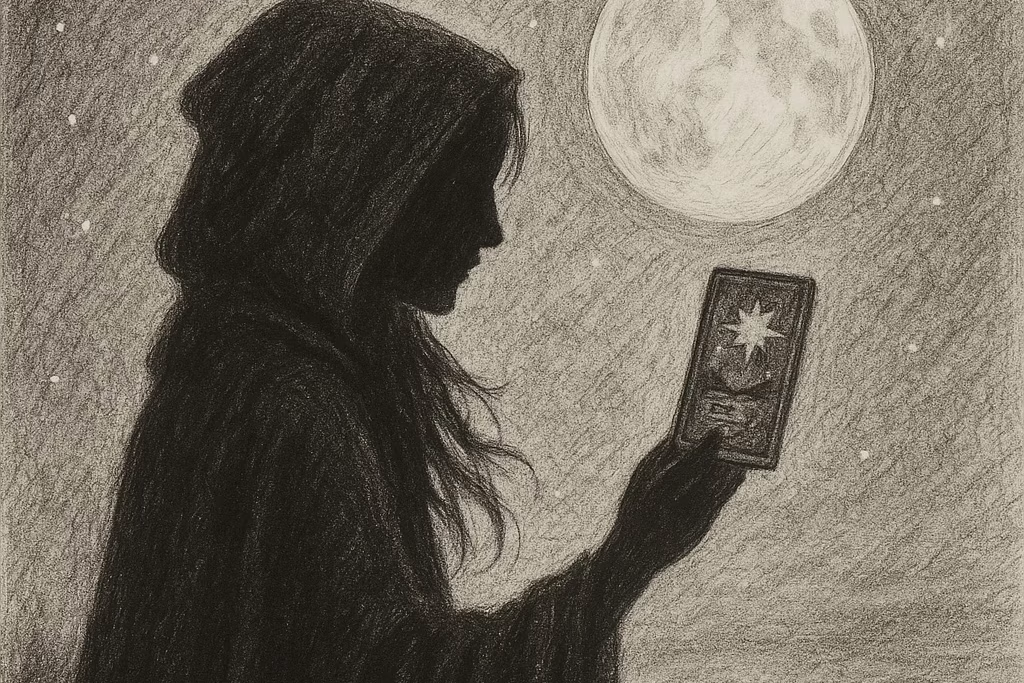
When I let go of needing to be an expert or a mystic, I became a better reader. I practiced with simple tarot spreads—one card, three cards—and asked questions like: What can I learn from this? What’s shifting within me? Over time, the cards became familiar allies. They didn’t give me all the answers, but they helped me ask better questions.
Myth 4: You Can Learn Tarot in a Weekend
Ah yes, the seductive promise of mastering Tarot in 48 hours, as if the entire system of archetypes, symbols, intuition, and personal reflection could be digested like fast food. I fell for this one too—thinking if I just read the right book or took the right course, I’d suddenly “know it all.” But Tarot is not a crash course; it’s a lifelong study. The beauty of Tarot lies in its unfolding layers—each card, each reading, each question reveals something new. Rushing through it misses the point. It’s like trying to speed-read a poem—you can, but why would you?
Instead of sprinting, I committed to pacing myself. I focused on one card at a time, revisiting familiar ones with fresh eyes. I let my understanding grow through repeated practice, reflection, and honest curiosity. And that’s when the magic actually started to happen.

Myth 5: You Need a Special Deck to Start
This one held me hostage in indecision for months. I believed that unless I had the “right” deck—one that called to me under a full moon or fell off a metaphysical bookshelf into my lap—I couldn’t start learning.
But here’s the thing: any deck you feel comfortable with is the right deck. Maude once whispered, “The right deck is the one that doesn’t make you cringe,” which honestly saved me from another six weeks of indecision. You don’t need it to be gifted to you. You don’t need it to be rare, ancient, or Instagrammable. You need it to be readable. And the only way to find that out is to use it. I finally picked a deck that felt accessible and inviting. Not because it had sacred vibes, but because I liked the artwork and could actually see myself working with it. That was enough. Spoiler alert: it still works.
Intuitive Tarot Reading Tools—That Help
Here are a few beginner-friendly resources that helped ground my Tarot journey:
- “Seventy-Eight Degrees of Wisdom” by Rachel Pollack – A deep dive into symbolism and psychology in Tarot.
- Learning the Tarot by Joan Bunning – A structured, beginner-friendly course that builds confidence.
- Biddy Tarot – Accessible interpretations, tutorials, and a helpful blog for learning tarot step-by-step.
- Benebell Wen’s website – Insightful resources that bridge esotericism with practical learning.
These tools didn’t just teach me how to read tarot cards—they taught me how to learn. I returned to them often, not for the “right” answers, but for perspective and inspiration.
Encouragement for Beginners
You don’t need to know everything. You don’t need to be psychic. You don’t need to memorize a thing. You just need to begin with curiosity, patience, and a willingness to connect. Tarot is a lifelong journey. It’s a practice of reflection, not perfection. Keep a journal. Ask good questions. Trust the process. One card at a time, the Tarot will meet you where you are—and show you where you’re ready to grow.
Whether you’re looking to begin tarot for self-reflection, creativity, mindfulness, or personal growth, there’s no wrong place to start. Start simply. Stay curious. And let your Tarot journey unfold at your own pace.