Forget for a moment that tarot is full of symbols, archetypes, and dramatic little figures waving swords around or hauling sticks on their backs. Strip all the layers off, and what’s left staring at you? Color.
Color in tarot isn’t just aesthetic, it’s emotional language. It’s louder than symbols, faster than intellect, and often more honest than words. Red doesn’t politely wait for you to analyze it; it grabs you by the collar and says, “Hey!” Blue? It sinks into your chest like a sigh you didn’t even realize you were holding. Yellow beams straight into your brain, demanding you wake up and pay attention. Here’s the catch: most of us treat color like background noise, something to notice second or third. If at all, after we’ve already dashed off to check the guidebook. But color bypasses meaning. It skips the line and heads straight into intuition. And when you let yourself feel it first, before archetypes, before guidebooks, you realize each shade is already speaking in its own language.
Today’s practice isn’t about memorizing a rainbow of correspondences. It’s about noticing. Feeling. Asking: What does this color do to me right now? Because intuition doesn’t just whisper through symbols—it shouts, glows, and hums through hue.
Why Color Comes Third (and Not First)
If color is so powerful, why didn’t we start here? Or tuck it into Day 2 with the senses?
Fair question.
Yes, color is visual, but it’s not just seeing. It’s meaning-making. The moment you register a hue, your brain is already weaving memory, emotion, and association. Red isn’t just “red.” It’s fire, passion, danger, lipstick, stop signs, blood. Blue isn’t just “blue.” It’s ocean, sky, calm, sadness, loyalty. Color doesn’t sit quietly in the background; it barges in with a whole filing cabinet of archetypes and cultural baggage. That’s why it comes third.
- Day 1 was about the spark—catching intuition raw, before analysis.
- Day 2 was about the gates—anchoring intuition in the senses, noticing the subtle data your body provides.
- Day 3 is color—because unlike the flicker or the shiver, color drags story and symbolism with it.
By waiting until now, you already know how to notice impressions without defaulting to “what the book says.” Color belongs here because it’s both a sensory cue and a symbolic amplifier. It’s where intuition and archetype start to blend. Too early, and it would have overshadowed the subtler gates. But now? You’re ready to let color speak without drowning everything else out. And I’ll admit this much: I love color. I get lost in it—whether I’m in a park, an art aisle, or anywhere shiny and bright. So, fair warning: today may feel less like “study” and more like getting pulled down the rabbit hole of intuitive technicolor.
Day 3: Intuitive Tarot Reading—Exploring Color in Tarot
Concept: Color as Intuitive Language
Tarot is a visual system, yes, but intuition doesn’t only speak in pictures—it borrows any open door. Color is one of the most direct doors because it’s both immediate and unavoidable. Before you’ve even registered the figure on the card, your nervous system has already reacted to the red cloak, the golden light, or the wash of gray across the sky.
Unlike symbols, which often require interpretation, color is primal. It doesn’t wait politely for analysis; it floods in, stirring instinct and emotion. A flash of green may soothe, a streak of orange may agitate, a field of violet may feel like standing inside a cathedral. This isn’t intellectual; it’s sensory dialogue. When you tune into color first, you’re catching intuition in action, not just decoding imagery. Each shade becomes a messenger, shaping your experience of the card before words even enter the picture.
Why It Matters
If memorization is the map and the senses are the compass, then color is the terrain. The map can show you where to go. The compass can point you in the right direction. But the terrain? That’s what you’re actually walking on, the steep hills, the soft moss underfoot, the sudden mudslide that changes everything. In tarot, color is that terrain. It shapes how you move through the card, how it feels to be there, and whether the path feels smooth, heavy, or electrified.
Ignore the terrain, and your journey becomes abstract, lines on a page, coordinates without context. Ignore color in tarot, and your readings flatten into keywords and rote meanings. But when you let color set the ground beneath your feet, your intuitive tarot reading becomes embodied. A red-soaked card doesn’t just “mean passion or conflict” it feels like standing on burning earth. A field of green doesn’t just “mean healing or abundance” it relaxes your breath, loosens your shoulders, grounds you in renewal.
Color matters because it makes the reading lived, not memorized. It transforms tarot from flashcards into landscapes. Each hue is a terrain your intuition has to walk through sometimes soft and easy, sometimes jagged and raw. Either way, it changes the journey.
The Science of Color & Intuition
Turns out color isn’t just eye candy, it’s brain candy. Psychologists and neuroscientists have studied how color impacts mood, memory, and perception for decades, and the results line up beautifully with how to do intuitive tarot reading.
- Color bypasses logic. Studies in color psychology show that hues can trigger emotional and physiological responses before conscious thought kicks in. Red can raise your heart rate. Blue can lower blood pressure. Yellow can sharpen alertness. In other words, your body reacts to color before your brain gets a chance to explain it away.
- Color is tied to memory. Neuroscience shows that we encode memories with sensory details—especially color. That’s why a particular shade of green might yank you back to your grandmother’s kitchen tiles or a deep indigo might remind you of nights spent stargazing. Tarot cards lean on this: the colors stir memory and emotion, which your intuition then weaves into meaning.
- Color drives focus. Research in learning and design suggests that color can highlight, emphasize, or direct attention more effectively than text. In tarot, that means the color that jumps out first may be your subconscious pointing to the emotional “hot spot” of the reading.
- Color influences decision-making. Marketers know this (hence the endless red “Buy Now” buttons), but so do tarot readers. A card drenched in dark tones may make you hesitate, while a card glowing with bright hues might encourage movement or optimism.
Here’s the takeaway: color speaks directly to your nervous system and your unconscious. It’s not just symbolic it’s somatic. Which is why noticing color in tarot isn’t about learning correspondences first; it’s about catching how your body and emotions respond in real time. So when your intuition says, “This red feels like danger,” that’s not randomness. That’s data. Your nervous system is already tuned in; your job is just to notice.

Today’s Practice: Tarot in Technicolor
Sacred space doesn’t require velvet cloth or crystal towers. It begins the moment you say: I am here now. Light a candle if you want. Or just breathe, shuffle, and focus. The sacred lives in attention, not aesthetics.
Card One — The Dominant Shade
Look at the first card and notice what color dominates the scene. Is it a bold, aggressive red? A serene oceanic blue? A murky gray that makes you feel unsettled?
Prompt: How does this color feel in your body? (Tension, relaxation, heat, coolness?)
Card Two — The Contrasts
Turn over the second card and pay attention to the clash or balance of colors. Do they feel like they’re working together or fighting for attention? Is the contrast sharp or subtle?
Prompt: Do these colors create harmony, or do they spark friction?
Card Three — The Story in Hue
Lay out the third card and let the entire palette speak. Forget the figures, forget the symbols—what is the emotional storytold only through the colors?
Prompt: If this card were an atmosphere or a mood, how would you describe it?
Optional Twist: Close your eyes between each card, take a breath, and then open them to notice which color your eyes land on first. That “first glance” is often your subconscious pointing to the emotional hotspot of the card.

Reflection: When Color Stays with You
Reflection doesn’t stop at noticing color in the moment, it lingers. The real magic of color is how it sticks, how it shows up again later. Maybe the red of a card echoes in the shirt you wear tomorrow, or the blue of a background suddenly feels like the mood you’ve been carrying all week. Reflection is what transforms a single tarot moment into a thread you can follow through your daily life.

When you journal about today’s practice, don’t just ask “What did I see?” Ask:
- Which color followed me after the reading?
- Did it shift in meaning with time or context?
- Was it comforting, unsettling, energizing?
- Did it repeat anywhere else in my day—clothing, weather, even emotions?
Reflection matters here because color isn’t static. It changes depending on light, mood, and memory. By returning to it, you’re not chasing a “correct” meaning—you’re training your intuition to recognize when something resonates and when it resists.
Optional Expansion: Build Your Personal Color Glossary
Over time, colors in tarot stop being abstract and start becoming personal. The red in your deck might not read like “anger” at all—it might always feel like momentum, or urgency, or even love.
To deepen today’s practice:
- Choose one color that stood out to you in your three-card pull.
- Track it across multiple cards this week. Every time it appears, jot down what it feels like in that moment—don’t worry if it shifts.
- Build your glossary. After a few days, look back at your notes. Are there repeating patterns? Do certain shades carry consistent meanings for you?
This becomes your personal lexicon of color—something no book can hand you.
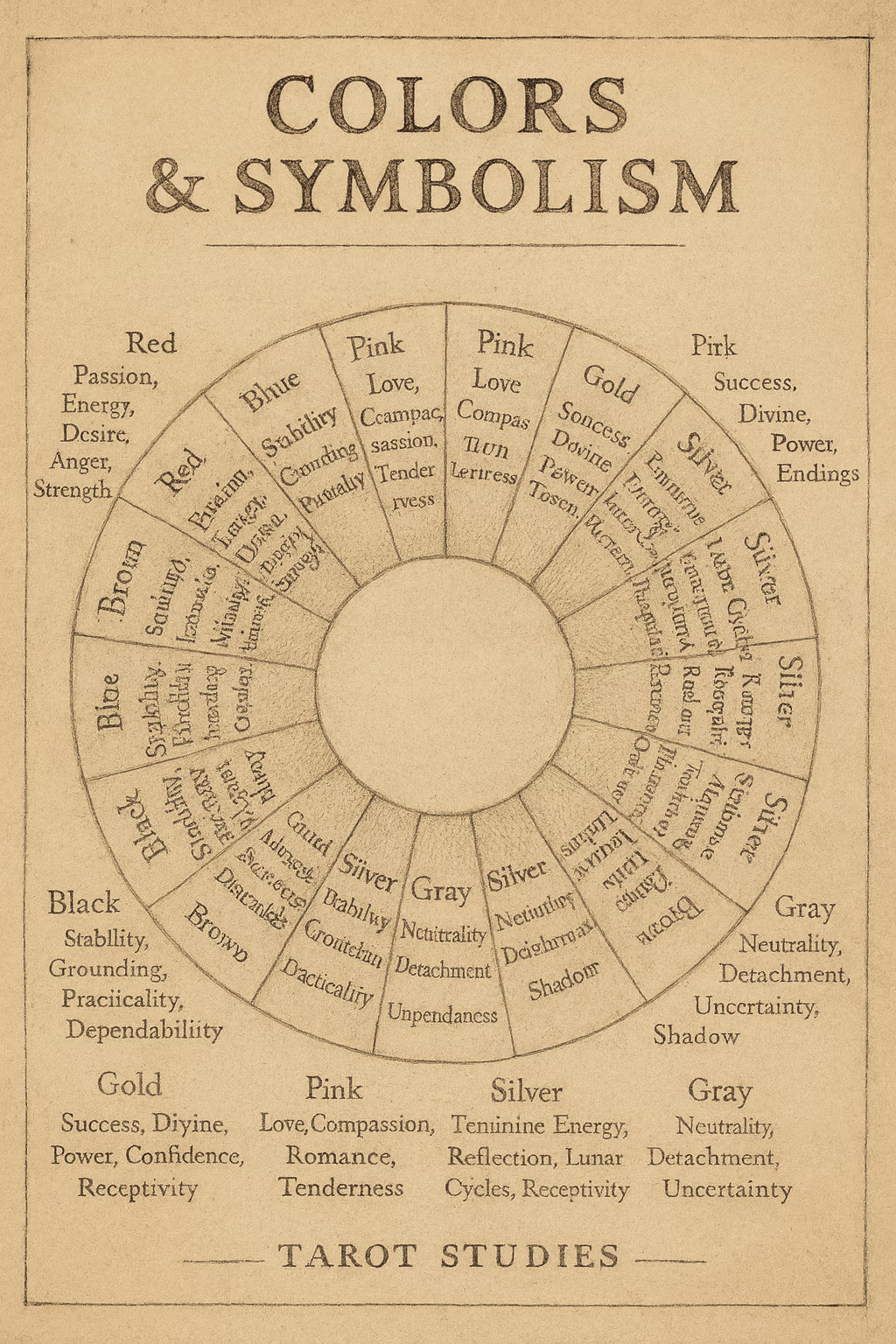
Download the Intuitive Tarot Reading Color Guide
Deepening the Practice: Optional Activities
Choose a single card. Imagine the entire scene drained of color, rendered only in black, white, and gray. Now, bring the colors back in your mind’s eye one at a time. Which hue shifts the card’s emotional impact the most? Which one feels essential to the meaning?
Lay out three to five cards in a row. Ignore symbols and figures—focus only on the dominant colors. Together, do they feel like a storm, a sunrise, a lullaby, a battle? Name the “mood” of the palette, then check if that theme echoes something unfolding in your life.
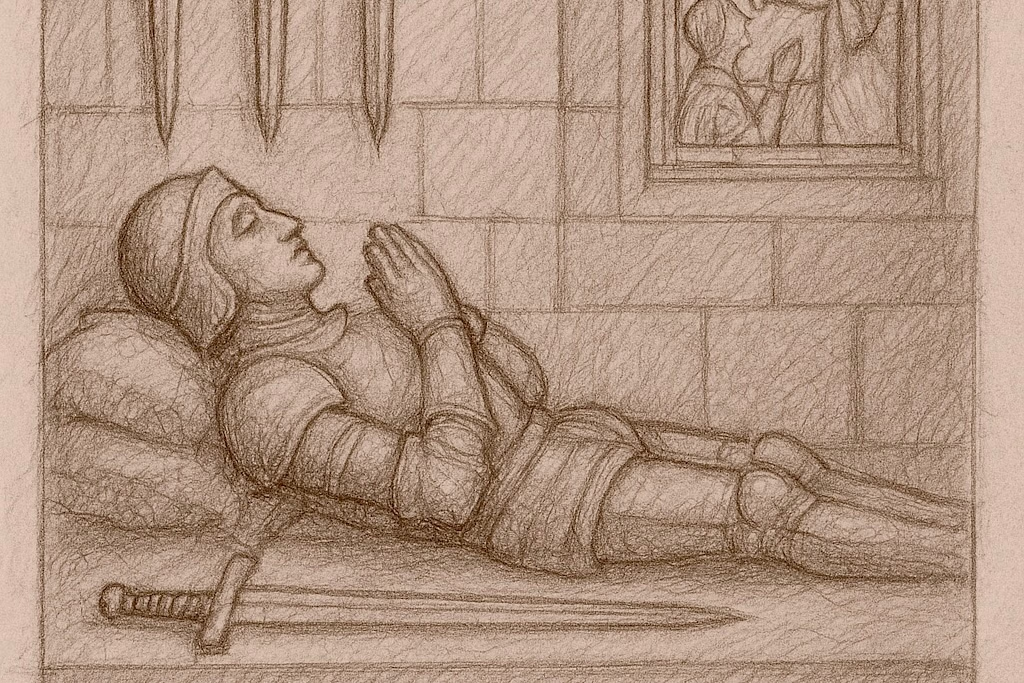
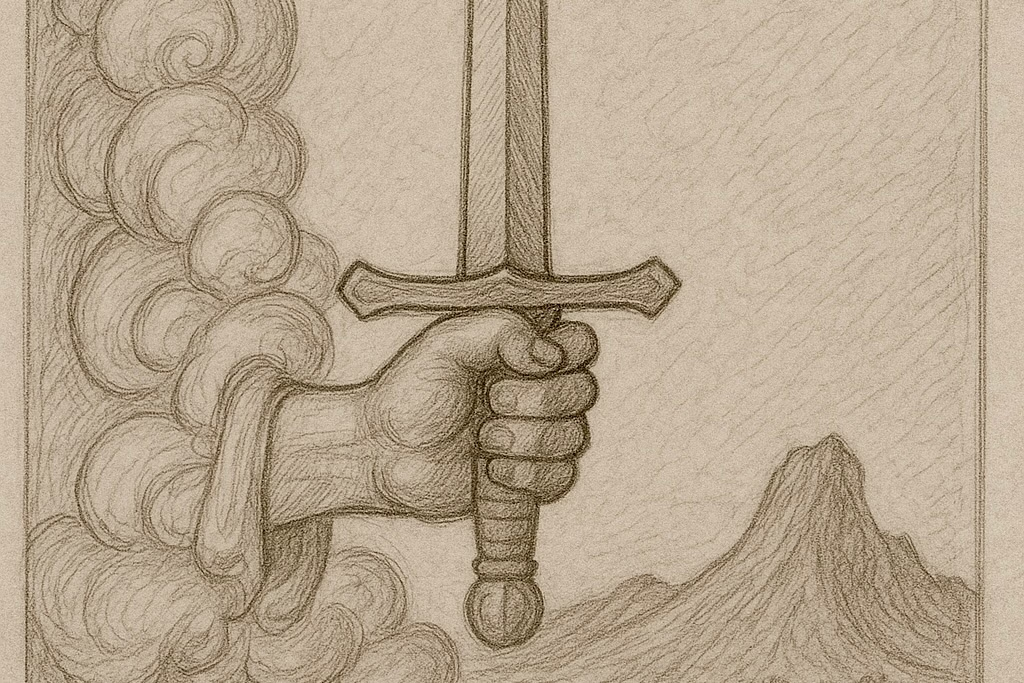
Here are three cards to practice with.


For the next 24 hours, notice when the colors from your reading show up around you—on a billboard, in clothing, in the sky. Each time, pause and reflect: does the emotional weight of the color change in this new context?
Integration & Real-Life Application
Why Integration is the Real Challenge
Reflection sharpens awareness, but integration is where it becomes yours. Today isn’t just about noticing red, blue, or yellow in the cards, it’s about letting those colors bleed into your daily awareness.
Think of it this way: if memorization is the map, senses are the compass, and color is the terrain, then today’s challenge is to actually walk through it. To move from “that’s interesting” to “I notice this everywhere.”
Choose 1–2 Applications for the Day:
- Wardrobe & Mood: Pick a color from your reading and intentionally wear it, or bring it into your space (scarf, mug, sticky note). Notice if embodying the hue shifts how you feel.
- Color Tracking: Keep a running list of where your day’s tarot colors show up “in the wild.” See if they echo the emotional tone you pulled from the cards.
- Emotional Anchor: When stress or doubt creeps in, recall the card’s dominant color and the way it made you feel. Use it as a touchstone to re-center.
The challenge isn’t to intellectualize what color “means”—it’s to test what it does when you let it follow you beyond the reading table.

Closing Thoughts for Day 3
Today, you stepped into tarot in technicolor. Color wasn’t just background, it was the voice of the card itself. You saw how red can push, blue can soften, yellow can spark, and how your body reacts before your brain has time to translate. That’s intuition at work direct, unfiltered, and immediate.
Your Takeaway: Intuitive tarot reading deepens when you let color speak first. Every hue is its own language sometimes subtle, sometimes loud—but always carrying a message that goes beyond memorization.
Community Invitation: Share your reflections was there a color that wouldn’t let go of your attention? Did a particular hue shift the way you saw a familiar card? Post your experiences with our challenge tag so we can explore the spectrum together.
Looking Ahead: Tomorrow, we move from colors into characters. The cards will stop being just images and start becoming personalities, archetypes that walk, talk, and challenge you directly.
Affirmation:
“I trust the language of color to guide my intuition. Each shade reveals a truth beyond words.”
While you continue to practice with your intuition. Check in with Tarot Talk: and see what the cards have to say for themselves.