
This Post is all about
Whether you’re reading for clients or decoding your own chaos, these tips will sharpen your spreads, strengthen your intuition, and save you from over-pulling like you’re building the Tower out of Tarot Clarifiers.
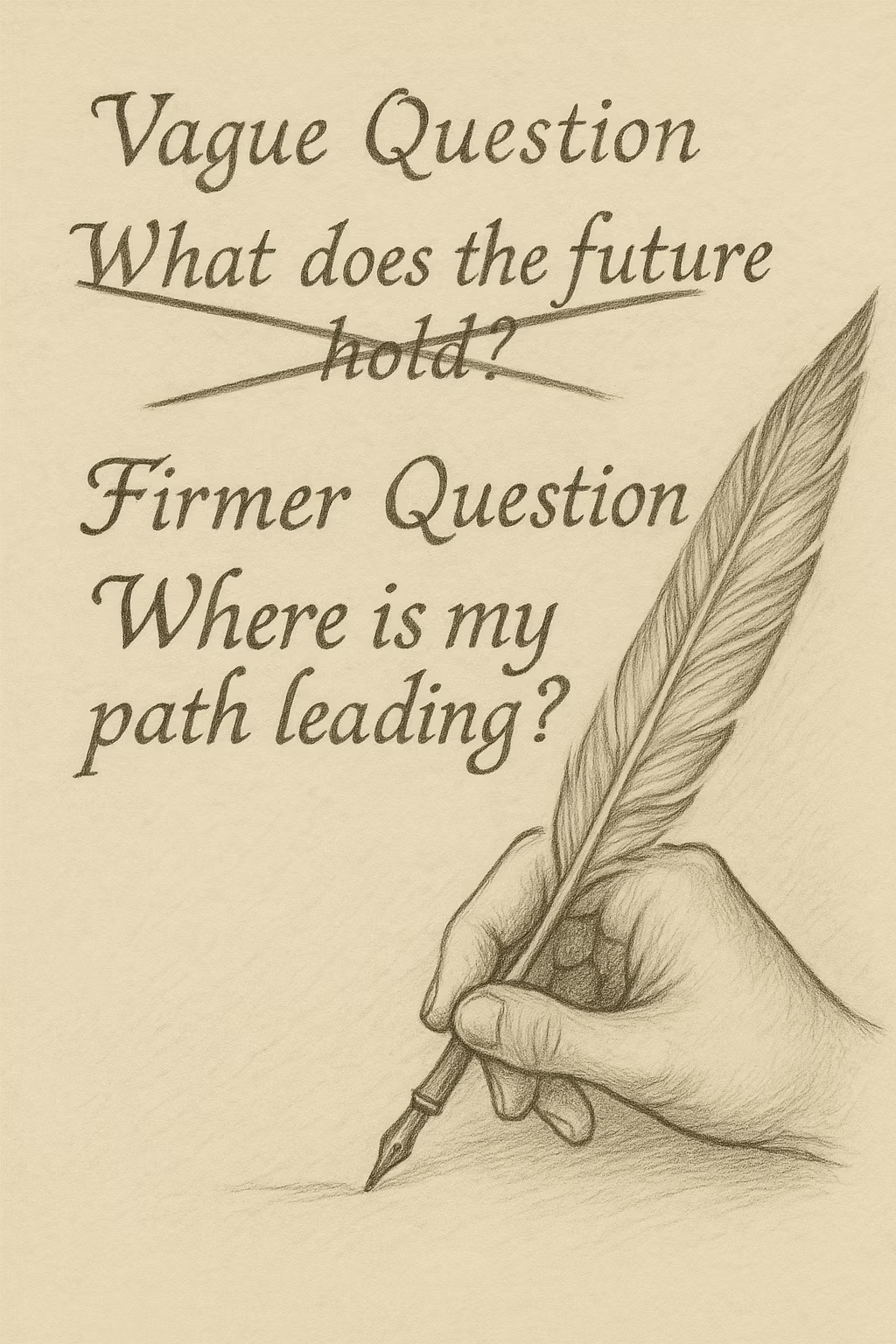
Firm Up That Floppy Question
(Because Your Reading Is only as Clear as Your Curiosity)
In Tarot, as in life, it all starts with the question. This is your compass, your north star, your starting block.
Firming up your question is like prepping your body for a marathon. You don’t just wake up and run 26.2 miles without some squats, stretches, and a whispered prayer to your knees. Likewise, you can’t sit down with your deck and ask, “Will I be happy?” and expect a crystal-clear roadmap to fulfillment. That’s like asking your GPS, “Will I arrive?” instead of giving it an address.
Just like you’d train your body to carry you through a long journey, you train your Tarot practice by building strong, intentional inquiry muscles. Weak questions lead you in circles and set you on the path for when a Tarot card makes no sense. Firm ones put you on the path of understanding.

Bad
“Will I get the Job?
Better
“What do I need to know about this job opportunity?”
Best
“What energy surrounds this job opportunity, and what should I consider before accepting?”
See the difference? The last one invites the cards to speak in nuance. It’s like asking The High Priestess for a story instead of demanding The Magician do a quick magic trick.
Why Most Confusing Readings Start With a Wobbly Question
Let’s be real: when you’re confused about a reading, it’s often because you started with a terrible question, not “morally bad,” but, as in , completely unhelpful.
- “Will I be happy?”
- “Is he the one?”
- “What is my future?”
These are the epitome of vague, softer around the edges than a Court card in retrograde (seriously, makes no sense.). The problem isn’t that they’re unworthy questions; it’s that they’re too squishy to give the cards anything to work with.
Tarot isn’t a game of Twenty Questions. It’s not about pulling card after card until the universe blurts out the “right” answer. Tarot works best with precision that still leaves room for reflection and a clear focus. That’s when spreads start acting like helpful conversations instead of cryptic riddles.
Checklist for Firm Questions
Crafting a clear, resonant question is like tuning your inner frequency to match the energy of the cards. When the tuning’s off? Static. Chaos. Confusion.
Before you even shuffle, ask yourself

- Is my question open-ended (invites exploration, not just “yes/no”)?
- Is it specific enough to focus the reading?
- Does it allow room for nuance and surprise?
- Am I asking about my own choices and perspective, not someone else’s thoughts or actions?
| Soft / Vague Questions | Firmed-Up Versions |
|---|---|
| What’s going on in my life? | What patterns are shaping my current emotional state? |
| Will I ever find love? | What energy am I putting out that affects romantic connection? |
| Why is my boss so awful? | What can I do to navigate the tension in my workplace? |
| What should I do? | What strengths can I draw on to move forward confidently? |
If you can check all four boxes, you’re setting your reading and your intuition up for success.
The Go-To Framework for Solid Questions:
If you’re stuck rewording your question, try one of these proven formats. They keep your reading focused while leaving space for the cards to surprise you.
Time-Focused
“What is unfolding for me in the next 2 weeks?”
Great for short-term clarity without demanding a lifetime prophecy.
Choice-Based
“What shifts if I choose A vs. B?”
Perfect when you’re weighing options and need to see the ripple effects.
Emotion-Rooted
“What is the deeper emotional pattern driving this situation?”
Helpful for going beyond surface-level “what happened” and tapping into the why.
Tarot Studies Tip
Firm questions = firm foundations. Ask mushy questions, and you’ll get mushy answers. Tarot isn’t being difficult — it’s being literal.
Tarot Clarifiers: Your Tarot Decoder Ring
Tarot Clarifiers are your spiritual “Can you repeat that?” The card you pull when the first one looks at you like the Queen of Swords deciding how blunt to be. You know there’s something there, but the message is fogged up like a bathroom mirror after a hot shower.
A clarifier is one follow-up card that adds context to a confusing pull. You’re not starting over; you’re asking for details. Think zooming in, not re-doing.
Example:
You ask about a new relationship and pull The Devil. Oof. That’s… intense. Is this magnetic passion or emotional sabotage? You pull a clarifier and get Two of Cups. Suddenly, this doesn’t scream “run.” It whispers, “Proceed, but don’t lose yourself.“

When to use a Tarot Clarifier
When Not to Use a Tarot Clarifier
Tarot Studies Tip
Pulling a clarifier is like asking the card to repeat itself, not rewrite the whole essay.
Why Some Readers Use Three Cards
Some Tarot readers don’t stop at one clarifier. They’ll pull three Tarot Clarifiers. At first glance, this looks like over-pulling (hello, slippery slope into that 17-card spread you swore you wouldn’t do). But when done with intention, it can be powerful.
Think of it as zooming in with three camera angles: wide, medium, and close-up.
Here’s why some readers love the three-card clarifier method:
- Different angles on the same message: Instead of hoping one extra card clears the fog, three show you facets you might have missed. It’s like rotating a gemstone under the light—suddenly the hidden sparkle shows.
- Creating a mini story for context: Three cards can line up as a narrative, giving the confusing card a “before, during, and after.” That single baffling symbol now lives inside a scene you can read instead of a riddle you’re stuck decoding.
- Confirming or deepening the theme: Sometimes the trio circles back and shouts the same message three times. Other times, it unpacks layers you didn’t realize were there. Either way, it gives weight and clarity to the original card.
It can work if you’re disciplined. The danger is slipping from clarifying into chasing an answer you want. That’s when the spread becomes a hall of mirrors: one card leads to three, three lead to five, and suddenly your “quick one-card pull” looks like you’ve cracked open the Akashic Records with a crowbar.
To keep yourself focused, frame your clarifier questions with intention:
- What is this card trying to show me?
- What should I do with this message?
- What action can I take toward clarity?
Notice how each question builds, first understanding, then advice, then action. This keeps the clarifiers aligned with your growth instead of feeding your anxiety.
Tarot Studies Tip
One clarifier = repeat yourself. Three clarifiers = explain it in a sentence, a paragraph, and a story. Just don’t let it spiral into a full-blown novel.
Modifiers: The Mood Influencers of Your Spread
Modifiers are the emotional backlighting of a spread. They’re not the main card. They’re the ones sitting nearby, tweaking tone and whispering, “…but also this. “If the main card is the sentence, the modifier is the tone of voice. Exact same words, completely different delivery.
Examples in Action
- The Tower + Temperance → Not just destruction. This is mindful demolition — deep breaths between collapses.
- The Lovers + Nine of Swords → Love mixed with worry. A choice you’ll be thinking about at 2 a.m.
- The Fool + Ten of Wands → That carefree leap just got heavy. Welcome to the “Oops, why is this so hard?” phase.
- Three of Cups + Five of Cups → Celebration with an aftertaste of loss. Sweet turned bittersweet.
How to Feel a Modifier Instead of Just Seeing It
You’ll know a modifier has wandered into your reading when a card just… refuses to stay quiet. It’s sitting there, technically in the second or third position, but acting like it owns the place. The tone of the whole spread shifts, like someone dimmed the lights or turned the music up a notch. And your gut? It’s already whispering, “This one’s tinting everything you see here.“
- A nearby card feels louder than its position suggests.
- The tone of your reading shifts unexpectedly.
- Your intuition says, “This card isn’t random — it’s coloring the whole spread.”
Each suit leaves its fingerprint when it plays modifier: Cups tend to soften the edges, Swords sharpen them, Pentacles ground the energy, and Wands? Oh, Wands will happily escalate the situation into a spark or a full-blown wildfire.
- Cups might soften the message.
- Swords might sharpen it.
- Pentacles might ground it.
- Wands might spark or escalate it.
Tarot Studies Tip
When a reading feels “off,” scan for modifiers. They’re not the headline, but they’re shaping the emotional weather report.
The Tarot Studies Modifier Mood Board
Significator: Chosen before the spread, represents the querent.
Anchor: Reveals itself naturally, becomes the emotional gravity of the spread.
| Modifier Card | It Might Be Saying… |
|---|---|
| The Moon | The situation is unclear; intuition must lead the way. |
| Page of Wands | There’s new potential here — but watch for impulsive sparks. |
| Nine of Swords | This is hitting an old wound or triggering anxiety. |
| Queen of Cups | Emotional awareness and intuition are everything here. |
| Knight of Swords | Things are moving fast — maybe too fast. |
| The Devil | Pay attention. Something’s gripping you tighter than you think. |
Anchor Cards: The Spread’s Gravitational Center
f a spread feels like a chaotic group chat — Wands yelling, Cups crying, Swords overthinking, Pentacles asking if this is budgeted — look for the anchor card. It’s the one holding the spread together. The why behind the what. The energy around which everything else orbits.
Where You’ll Spot an Anchor Card
- The first card pulled in a one-card or daily draw.
- The central position in a spread (like the heart of a Celtic Cross).
- The card that just won’t shut up, energetically speaking.
They don’t always scream for attention. Sometimes they hum. But their message is the one that’s going to stick with you.
Examples:
- Career spread: Ace of Pentacles + Five of Wands + The Chariot. The Ace of Pentacles is the anchor — a tangible beginning. The others? Just the weather around it.
- Daily draw: Pull The Hermit. Suddenly, the whole day feels like it’s orbiting “observe, don’t rush.” That’s an anchor at work.

Anchor Card vs. Significator
Significator: Chosen before the spread, represents the querent.
Anchor: Reveals itself naturally, becomes the emotional gravity of the spread.
| Element | Significator | Anchor Card |
|---|---|---|
| How it shows up | You choose it intentionally. | It reveals itself organically. |
| When it appears | Before the reading begins. | During or after the spread is laid. |
| Its job | Represents the querent or situation. | Becomes the emotional center of gravity. |
| Energy | You assign the role. | It claims the role for itself. |
Tarot Studies Tip
You don’t always need a significator. But always look for the anchor. If the significator is the file label, the anchor is the letter inside saying, “Read me now.”
The Interpretation Toolkit: Your Tarot Decoder Trio
You asked a solid question. You shuffled with intention. And then the cards showed up like a riddle wrapped in a mood, wearing symbolic eyeliner, and side-eyeing your third eye.
Don’t panic. You’ve got tools.
1️⃣ Clarifiers
When the message is vague, slippery, or just plain weird, pull one card (unless you’re assigning roles, not spiraling).
Think of it as your Tarot translator: “Hey, Devil — could you be a bit more specific?”
Use when: you need context, not comfort.
2️⃣ Modifiers
The mood influencers. They show up naturally and shift the tone of the cards around them.
A Tower moment with Temperance? That’s healing chaos.
The Lovers with Nine of Swords? That’s a romantic decision keeping you up at night.
Learn to feel their energy so you stop mistaking emotional volume for emotional chaos.
3️⃣ Anchor Cards
The gravitational center. The one card everything else orbits.
You don’t choose it — it claims you.
If your spread feels like too many voices yelling at once, find the card that won’t let you look away. That’s where the true message lives.
Together, these three tools will save you when:
- A card makes no sense.
- A spread speaks three different emotional languages.
- You’re tempted to reshuffle the whole deck in a fit of existential side-eye.
With them, you’ll go from “What is this nonsense?” to “Ah, got it” — and maybe even learn to love the weird ones along the way.
Reframing Confusion: Don’t Fight It — Work With It
Sometimes a card isn’t confusing because you misread it. It’s confusing because the question itself isn’t ready for a straight answer. That’s where reframing shines. Think of reframing as adjusting the lens: stepping back, turning the knob, or finding a side entrance. You’re not abandoning the question — you’re giving it a better doorway.

When you hit a wall with a card, pause and ask yourself:
- Is this card inviting me to slow down and let the answer unfold over time?
- Is it nudging me to zoom out and see the bigger context, instead of obsessing over one detail?
- Or is it asking me to sit with a feeling I’d rather rush past?
Because here’s the thing, confusion in Tarot is rarely a mistake. It’s often an invitation. An invitation to breathe, to adjust, to look again. Tarot has a funny way of ignoring the question you think you’re asking. Then, to hand you the one you need to face. One way to work with this, instead of fighting it, is to keep a “What Confused Me” Log.
In your log, jot down:
- Date of the reading
- The card and the original question
- How you felt about it at the time (frustrated, curious, indifferent, intrigued)
- What came to light later that shifted your understanding
Over time, this simple practice becomes gold. You’ll start noticing patterns both in the way certain cards behave for you and in your own growth as a reader. What once felt like static will start to feel like a signal, and your “confusing” cards will become some of your most trusted teachers. So, the next time your deck throws you a curveball, don’t panic and reshuffle. Reframe. Record. Revisit. Sometimes, the best insights are the ones that take their time.
The Real Secret
If you’ve made it here, you’re not afraid of complexity — and that’s your edge as a reader. Tarot isn’t a vending machine for tidy answers. It’s here to help you sit with the unknown long enough for it to transform into truth.
So when a card makes no sense:
- Breathe.
- Ask a better question.
- Use your toolkit: clarifiers, modifiers, anchors, reframes.
- Shift your lens when the first one fogs up.
Clarity isn’t a lightning bolt. It’s a lantern. And here’s the best part: you already carry it. Every reading, every log entry, every time you sit with confusion instead of tossing it aside. That’s you turning the flame up a notch.
Your deck knows you’ve got this. Now go prove it right.
Leave a Reply